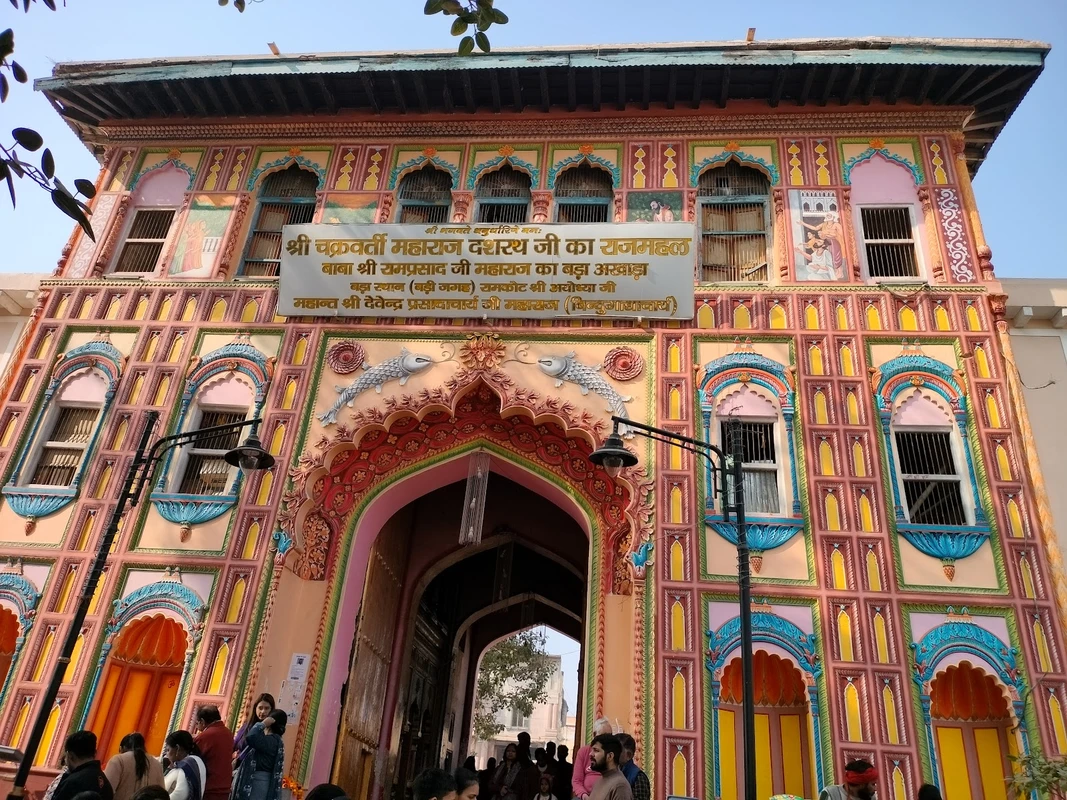
Dashrath Mahal - Ayodhya
A sacred palace-temple in Ayodhya, traditionally believed to be King Dashrath's royal residence and Lord Rama's childhood home, famous for its Ramayana heritage.
Key Highlights
About Dashrath Mahal
Dashrath Mahal, also known locally as Badi Jagah, is associated in Ayodhya’s devotional tradition with King Dashrath, the father of Lord Ram. Today it is visited as a religious complex. Expect shrines, worship and a lived-in pilgrimage setting rather than a palace museum with furnished royal rooms.
What to expect
The site makes most sense when seen as part of the Ramayana landscape of the old city. Its name explains the traditional association; it should not be read as proof that every standing structure dates to the epic period. Spend time at the accessible worship areas and follow directions around any occupied or private sections.
How to fit it into your Ayodhya visit
Include Dashrath Mahal on the same walking circuit as Kanak Bhawan and Hanuman Garhi. It works well as a shorter stop between larger darshan visits, provided the shrine is open when you arrive.
Visiting with family
A temple visit is easier when everyone knows where to leave footwear and where to meet afterwards. Carry the essentials, keep the queue moving and ask an attendant before entering a side shrine. If someone needs a rest, agree a meeting point before the group separates. A nearby road does not guarantee a vehicle can reach the final entrance. For older travellers, discuss the walking surface, steps and waiting time before settling the order of the day.
Time, access and practical planning
Allow 30-45 minutes as a planning estimate, with additional time for the journey from your hotel. Confirm current opening and worship breaks with the venue before travel. Confirm current entry arrangements; optional offerings or services cost separately. Before setting out, confirm the final approach and return meeting point with your driver or companion. Keep one flexible part of the day so that a longer queue, a closed room or a change in the weather does not force the rest of your visit into a rush.
Travel Tips
Packages Including Dashrath Mahal



Nearby Places in Ayodhya


Frequently Asked Questions
What is Dashrath Mahal known for?
Dashrath Mahal, also known locally as Badi Jagah, is associated in Ayodhya’s devotional tradition with King Dashrath, the father of Lord Ram. Today it is visited as a religious complex. Expect shrines, worship and a lived-in pilgrimage setting rather than a palace museum with furnished royal rooms.
Where is Dashrath Mahal?
The visitor area is Old Ayodhya, near the Hanuman Garhi circuit. Use the full attraction name and city when arranging transport. If a map search offers several results, check the neighbourhood and entrance rather than choosing the first similarly named listing.
Will I see a royal palace museum at Dashrath Mahal?
The current visitor experience is mainly religious. Come for the association with Dashrath and the temple setting, rather than expecting an archaeological reconstruction or a collection of royal furniture. Follow the signs for the areas open to visitors.
How much time should I allow for Dashrath Mahal?
A useful allowance is 30-45 minutes. This is a suggested visit duration, not a guaranteed completion time. Add your transfer and any queue or entry checks, and avoid placing a non-flexible departure immediately afterwards.
When is the best time to visit Dashrath Mahal?
October to March; choose cooler morning or late-afternoon hours. For an outdoor approach, the heat matters as much as the clock. Check the venue’s opening window first, then choose the more comfortable part of the day for your group.
What are the opening or visiting arrangements?
Confirm current opening and worship breaks with the venue before travel. Check the latest notice for your date. Festival arrangements, maintenance or special programmes may change the usual access, and a published closing time may not be the last admission time.
What should I budget for entry and optional services?
Confirm current entry arrangements; optional offerings or services cost separately. Ask what the quoted amount covers before paying. Keep entry, transport, guides and any optional religious or visitor service separate in your budget so that an extra charge does not come as a surprise.
How should I combine Dashrath Mahal with nearby sightseeing?
Include Dashrath Mahal on the same walking circuit as Kanak Bhawan and Hanuman Garhi. It works well as a shorter stop between larger darshan visits, provided the shrine is open when you arrive.
Can older visitors or people with limited mobility visit?
Steps, queues and footwear arrangements vary. Ask about the actual accessible entrance before bringing a wheelchair; do not assume that nearby vehicle access means a step-free route to the shrine.
What should I know about photography?
Follow the instructions displayed at the entrance and ask before photographing worship, people or interiors. A camera allowed in an outdoor area may still be restricted inside. Avoid flash where prohibited and never block a queue or path for a photograph.
What should I check before leaving my hotel?
Confirm the correct destination, current access, final drop-off and return meeting point. The current visitor experience is mainly religious. Come for the association with Dashrath and the temple setting, rather than expecting an archaeological reconstruction or a collection of royal furniture. Follow the signs for the areas open to visitors.
Is Dashrath Mahal suitable for a short city visit?
It can fit if you allow 30-45 minutes and the transfer without rushing. Include Dashrath Mahal on the same walking circuit as Kanak Bhawan and Hanuman Garhi. It works well as a shorter stop between larger darshan visits, provided the shrine is open when you arrive. Choose the stops that interest your group most, rather than trying to cover every name on a list in one outing.